A practical guide for golfers who know how to play—but aren’t playing to their potential.
You’ve Put in the Time. So Why Aren’t Your Scores Improving?
If you’re looking for golf lessons in Fairfax, VA, chances are you’re not a beginner. You already understand the fundamentals, you play regularly, and you’ve spent plenty of hours on the range.
Yet your handicap hasn’t moved.
Maybe it’s the same slice that appears at the worst possible time. Maybe your irons are inconsistent, or your short game disappears under pressure. Whatever the issue, you’re working hard—but not seeing the results.
The truth is, most golfers don’t plateau because they lack commitment. They plateau because they’re working on the wrong things.
This guide explains why golfers get stuck and what it actually takes to break through to the next level.
Why Golfers Plateau
Most players between a 20 and 5 handicap aren’t missing effort—they’re missing clarity.
Hitting more range balls doesn’t automatically lead to lower scores. Without understanding why you’re missing shots, practice often reinforces the same flaws instead of fixing them.
The most common reasons golfers stop improving include:
- Compensating for swing flaws instead of correcting the root cause
- A swing that performs well on the range but falls apart on the course
- Good ball striking without a reliable strategy for scoring
- Physical limitations that restrict rotation, speed, or consistency
- Spending hours on the driver while neglecting the short game and putting
Until you identify which of these is costing you strokes, improvement becomes guesswork.
Why Diagnosis Matters More Than Another Swing Tip
The fastest way to improve isn’t collecting more swing advice—it’s getting an accurate diagnosis.
Many golfers chase YouTube videos, magazine tips, or advice from playing partners. Those suggestions might temporarily improve how the swing feels, but they rarely address the underlying problem.
A proper evaluation looks beyond the symptom.
Instead of asking:
“How do I stop slicing?”
An experienced instructor asks:
“What’s causing the slice in the first place?”
That distinction changes everything.
PGA-Certified Coaching Makes a Difference
Not every golf lesson is created equal.
A PGA-certified instructor is trained to evaluate swing mechanics, identify cause versus symptom, and build a progression that creates lasting improvement—not temporary fixes.
Fernando Martinez combines more than 28 years of PGA teaching experience with Golf Fitness certification, allowing him to evaluate both your swing mechanics and the physical limitations that may be affecting your game.
For many golfers, the issue isn’t simply technique.
It’s that their body can’t consistently perform the movement they’re trying to make.
Golf Performance Training: The Missing Piece
Many golfers eventually hit a physical ceiling.
Limited hip mobility.
Restricted shoulder turn.
Poor balance.
Core instability.
These limitations quietly reduce clubhead speed, consistency, and accuracy—even when your swing mechanics are sound.
Golf performance training identifies those restrictions and provides exercises that improve mobility, stability, and rotational power so technical changes become easier to repeat.
Instead of fighting your body, your swing starts working with it.
Consistent Coaching Produces Consistent Results
Improvement rarely comes from a single lesson.
Golfers who make lasting progress typically follow a structured improvement plan that includes:
- Video swing analysis
- Practice plans between lessons
- Ongoing progress tracking
- Adjustments based on performance
- Short-game and scoring strategy—not just full swing mechanics
Working with the same instructor over time creates accountability and ensures every lesson builds on the previous one.
Golf Lessons Near Fairfax and Springfield, VA
Fernando Martinez teaches at Virginia Golf Center as part of Raspberry Golf Academy, serving golfers throughout Northern Virginia.
Whether your goal is to break 90, break 80, or simply eliminate the swing flaw that’s been following you for years, instruction is built around measurable improvement—not quick fixes.
Every lesson focuses on lowering scores, improving consistency, and helping you transfer practice into better on-course performance.
How to Figure Out What’s Holding Your Game Back
If your scores haven’t improved despite consistent practice, follow this process.
1. Identify Your Biggest Pattern
Pinpoint where you’re losing strokes.
Is it:
Don’t settle for “I’m inconsistent.”
- Tee shots?
- Approach shots?
- Wedges?
- Putting?
- Pressure situations?
Specific problems lead to specific solutions.
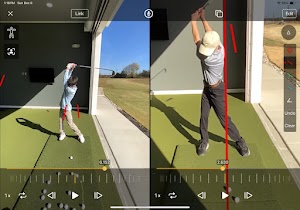
2. Record Your Swing
What your swing feels like and what it’s actually doing are often completely different.
Video analysis removes the guesswork.
3. Rule Out Physical Limitations
Mobility restrictions can create swing flaws that no amount of technical instruction can fully fix.
Evaluate both your mechanics and your movement.
4. Build a Plan Around One or Two Priorities
Trying to fix everything at once usually fixes nothing.
Focus on the changes that will produce the biggest scoring improvement.
5. Practice With Purpose
Every practice session should reinforce a specific objective—not simply hitting another bucket of balls.
Quality always beats quantity.
6. Measure Progress
Track fairways, greens, up-and-down percentage, putting statistics, and scoring trends.
Improvement should be measurable—not just something you hope is happening.
Frequently Asked Questions
Why can’t I break 90 even though I practice regularly?
Most golfers don’t need more practice—they need more focused practice. Random range sessions rarely address the specific swing flaw or scoring weakness costing the most strokes. A professional evaluation identifies where your biggest opportunities for improvement actually are.
Are golf lessons worthwhile if I already have a good swing?
Absolutely. Experienced golfers often benefit the most because instruction becomes highly targeted. Instead of learning fundamentals, you’ll focus on eliminating the one or two issues preventing lower scores.
Why does my swing feel great on the range but fail during a round?
Practice environments remove pressure, uneven lies, and course management decisions. A swing built on compensations often holds together on the range but breaks down during competition. Structured coaching helps make your swing reliable under real playing conditions.
Can golf fitness training really improve my game?
Yes. Mobility, balance, and rotational strength directly affect consistency, speed, and injury prevention. Many golfers discover their biggest limitation isn’t technique—it’s physical movement.
Stop Guessing. Start Improving.
If you’ve been stuck at the same handicap for years, the solution probably isn’t another swing tip.
It’s a clear diagnosis.
Once you understand exactly what’s causing your misses—whether it’s technique, course management, or physical limitations—you can build a plan that produces measurable improvement.
With more than 28 years of PGA-certified teaching experience, Fernando Martinez helps golfers throughout Fairfax, Springfield, and Northern Virginia identify what’s holding them back and develop a roadmap to lower scores.
If you’re ready to stop guessing and start making real progress, schedule a swing evaluation and discover what’s standing between you and your next breakthrough.